Gonzy the Acantholipan
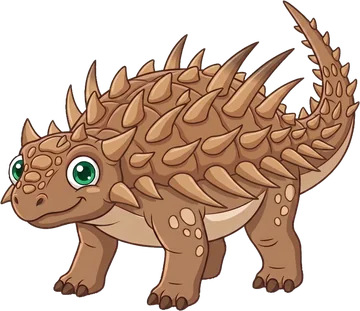
Acantholipan gonzalezi · Acantholipan (nodosaur)
Gonzy builds towers slowly and carefully. When she finishes, she gets excited, pushes it with her back... CRASH! And she builds it again, without ever getting upset.
Mexican paleontology for little ones
Dinosaurs found nowhere else in the world have been discovered in Coahuila, Mexico. Three of them are part of the Dony and the Dinos band, with their real scientific names.

Acantholipan gonzalezi · Acantholipan (nodosaur)
Gonzy builds towers slowly and carefully. When she finishes, she gets excited, pushes it with her back... CRASH! And she builds it again, without ever getting upset.

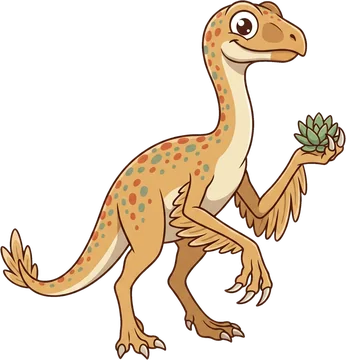
Mexidracon longimanus · Mexidracon (ornithomimid)
Mexi has feathers, looks like an ostrich and has super long hands. She reaches the highest leaf and the stuck toy. She's the helper.

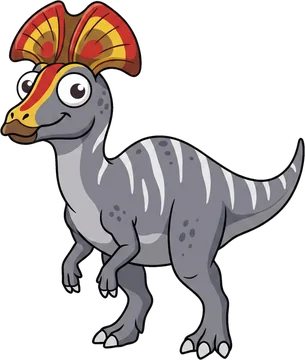
Tlatolophus galorum · Tlatolophus (hadrosaur)
Tlali opens the songs and leads the chorus. Her red and yellow crest is always there, and her sound is the only one that's a melody: laralá.
Queta the Quetzalcoatlus is Mexican in name, not in fossil: her remains were found in Texas and she's named after Quetzalcóatl. She wasn't a dinosaur either, but a flying reptile, the tallest in the whole band.
Several dinosaur species have been described in Mexico, many of them in Coahuila. Three are characters in Dony and the Dinos: Acantholipan gonzalezi, Mexidracon longimanus and Tlatolophus galorum.
“Word crest”: from the Nahuatl tlahtolli (word) and the Greek lophus (crest). Its name honors the speech scroll, the Mesoamerican symbol for speaking.
Only in name. Its fossils were found in Texas in 1971; it's named after Quetzalcóatl. It also wasn't a dinosaur, but a flying reptile.
About 66 million years ago an asteroid hit what is now Chicxulub, Yucatán. Its impact is linked to the extinction of the non-avian dinosaurs.